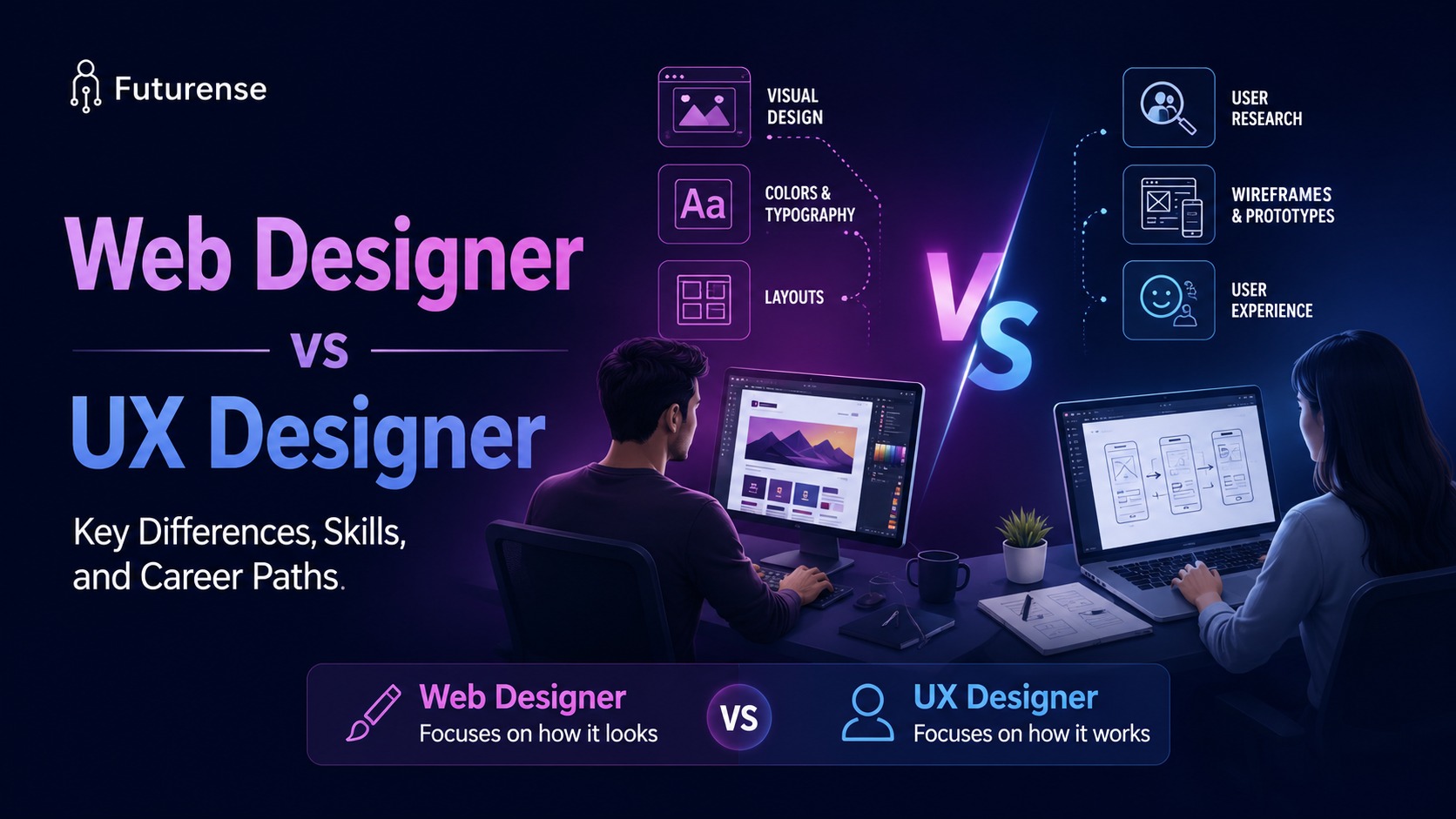


A web designer builds how a website looks layout, color, typography, and the visual flow of a page. A UX designer builds how a product works for the person using its research, wireframes, information architecture, and usability, often across an entire app or platform, not just a single website.
Both roles shape digital experiences, and their skills overlap more than most career guides admit, but the job you'd actually do day to day is genuinely different.
If you're choosing between the two as a career switch, a course decision, or a hiring call the difference matters more than the job titles suggest. This guide breaks down what each role actually does, which skills and tools each one needs, what each one pays in India, and how to decide which path fits you.
What Separates a Web Designer From a UX Designer
A web designer focuses on the visual aesthetics and front-end presentation of a website layout, imagery, typography, color schemes, and brand consistency, usually scoped to a single site or a small set of pages.
A UX designer focuses on the complete user journey across a digital product research, personas, wireframes, prototypes, and usability testing, often spanning websites, apps, and multi-step workflows well beyond a single page.
Put simply: web design is about how something looks and presents; UX design is about how someone experiences and completes a task within it. Both are real, respected design careers; neither is a "smaller" version of the other, despite what some comparison articles imply.
What Does a Web Designer Actually Do?
A web designer's day usually centers on turning a brand or a business need into a working, visually coherent website. That means:
- Choosing layouts, color palettes, typography, and imagery that match a brand.
- Building or adapting templates in tools like WordPress, Webflow, or Shopify.
- Writing enough HTML, CSS, and sometimes JavaScript to implement or adjust a design directly.
- Making sure a site is responsive and renders correctly across devices and browsers.
- Working closely with front-end developers, content writers, and marketing stakeholders to ship a finished page.
Web designers tend to work platform-first: the constraints of the CMS, the browser, and the client's brand guidelines shape most decisions. It's a role that rewards people who like seeing a finished, polished page go live, and who are comfortable being both a bit of an artist and a bit of a technician.
What Does a UX Designer Actually Do?
A UX designer's day usually centers on a different question: does this actually work for the person using it? That means:
- Conducting user research interviews, surveys, and behavioral analytics to understand real user needs.
- Mapping user journeys and information architecture before any visual design begins.
- Building wireframes and low-fidelity prototypes to test structure and flow.
- Collaborating with product managers, researchers, and developers across the full product lifecycle, not just one page.
UX designers tend to work user-first: the constraints of human behavior, cognitive load, and task completion shape most decisions, more than any single page's visual polish.
Web Designer vs UX Designer: Key Differences at a Glance
This table captures the general pattern but at smaller companies and startups, the two roles blur constantly, and a single "UI/UX designer" job title often expects someone to cover both. That's worth knowing going in: job postings don't always match the textbook definitions.
Skills Comparison: Web Design Skills vs UX Design Skills
The skill sets share a foundation of visual design principles, an eye for layout, basic prototyping but diverge quickly past the basics.
Tools Web Designers Use
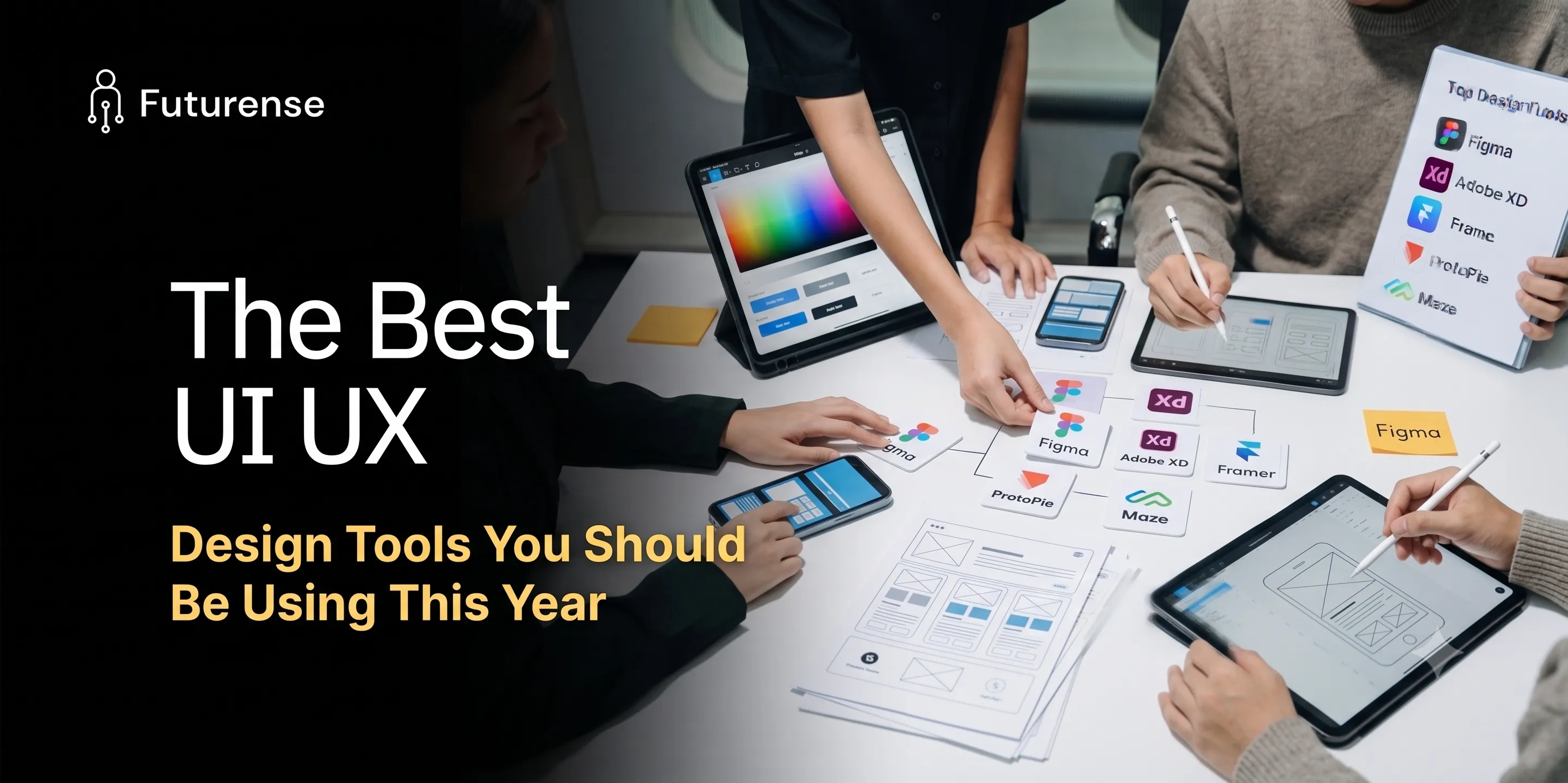
Web designers typically work across Adobe Photoshop and Illustrator for visual assets, Figma or Webflow for layout and handoff, and a CMS like WordPress or Shopify for actual site-building. Code editors and basic version control show up for designers who implement their own front-end work.
Tools UX Designers Use
UX designers typically work across Figma or Sketch for wireframes and prototypes, InVision or similar tools for interactive prototyping and stakeholder review, and research tools like Google Forms, UserTesting, or Hotjar for gathering behavioral data and feedback. Coding tools are optional, not core.
Web Designer vs UX Designer Salary in India
Compensation reflects the scope difference UX work tends to sit closer to product strategy, which employers pay more for, especially at senior levels.
The pattern holds pretty consistently across sources: senior UX-focused roles pull ahead of senior web-design roles, largely because UX work increasingly overlaps with product strategy and research skills companies pay a premium for as products scale.
Career Path: How to Become a Web Designer
- Build visual design fundamentals color theory, typography, layout principles, usually through a design course or self-directed practice with real projects.
- Learn a CMS and basic front-end code WordPress or Webflow to start, plus enough HTML/CSS to make small implementation changes without waiting on a developer.
- Build a portfolio of real (or realistic) client sites three to five strong projects matter more than a long list of small ones.
- Freelance or take a junior in-house role agencies and small businesses are usually the fastest entry point, since they hire for exactly this scope.
- Specialize or expand some web designers move toward e-commerce platforms (Shopify specialization pays well), others move toward UX as their projects grow in complexity.
Career Path: How to Become a UX Designer
- Learn UX fundamentals, user research methods, information architecture, wireframing, and usability principles, through a structured course or self-study.
- Practice with real (or simulated) research projects, even unpaid case studies with a clear research-to-prototype process demonstrate the skill employers actually screen for.
- Get fluent in Figma and a prototyping workflow most UX hiring managers expect a working command of Figma specifically, not just familiarity.
- Build a process-driven portfolio UX portfolios are judged on how you got to a solution (research, iteration, testing), not just the final screens.
- Start in a UI/UX generalist role if needed many designers enter through a blended UI/UX title before specializing fully into research-heavy UX work.
If you want a structured way through these steps rather than piecing it together yourself, the best UI/UX design courses, eligibility, and fees is a good next read.
Can You Do Both? The Rise of the Hybrid Web/UX Designer
In practice, plenty of working professionals do both, especially at startups and small agencies where a single "UI/UX designer" or "web/product designer" role is expected to cover research, wireframing, and final visual implementation. This hybrid path is common early in a career and tends to specialize later, once someone's portfolio and interests point clearly toward one side or the other.
If you're not sure which specialization fits you yet, starting broad and specializing after 1–2 years of real project experience is a completely reasonable strategy, arguably a safer one than committing to a narrow specialization before you've seen what the daily work of each actually feels like. For a clean breakdown of where "UI" fits into this picture too, see the difference between UI and UX design.
TL;DR
A web designer builds how a website looks layout, color, typography, and page-level polish, usually with working HTML/CSS knowledge. A UX designer builds how a product works for the people using its research, wireframes, information architecture, and usability testing, often across an entire product rather than a single page.
In India, web designers typically earn ₹3-4.5 LPA as freshers up to ₹15 LPA+ at senior levels, while UX designers typically earn ₹3-6 LPA as freshers up to ₹14-32 LPA+ at senior levels, with the gap widening as UX work overlaps more with product strategy.
Neither path is objectively better; web design offers faster, more accessible entry points, while UX design offers a more direct route toward product roles and higher senior-level pay.
What is the main difference between a web designer and a UX designer?
A web designer focuses on the visual presentation of a website layout, color, typography usually scoped to a single site. A UX designer focuses on the full user journey across a product, including research, wireframes, and usability testing, often spanning multiple screens or an entire app.
Is UX design the same as web design?
No. They overlap and often get bundled under the same job title at smaller companies, but UX design is scoped around user research and usability across a whole product, while web design is scoped around building and styling specific web pages.
Do web designers need to know how to code?
Most web designer roles expect at least working HTML and CSS knowledge, since implementing or adjusting a design directly is a common part of the job. UX designers don't typically need to code, though basic familiarity helps in collaborating with developers.
Can a web designer become a UX designer?
Yes, and it's a common transition. The visual design and prototyping foundation carries over directly; the main gap to close is user research methodology, information architecture, and usability testing skills most web designers can build through a structured UX course or self-directed case studies.
Which career path is better for beginners: web design or UX design?
Web design tends to have more accessible entry-level and freelance opportunities, especially through agencies and small businesses. UX design often has a steeper initial learning curve around research methodology but can lead to stronger long-term earning potential and a more direct path toward product roles.


Advanced Certificate Program in UI/UX Design with Agentic AI & GenAI
IITM Pravartak
India’s first Agentic Workflow-Led UI/UX Program