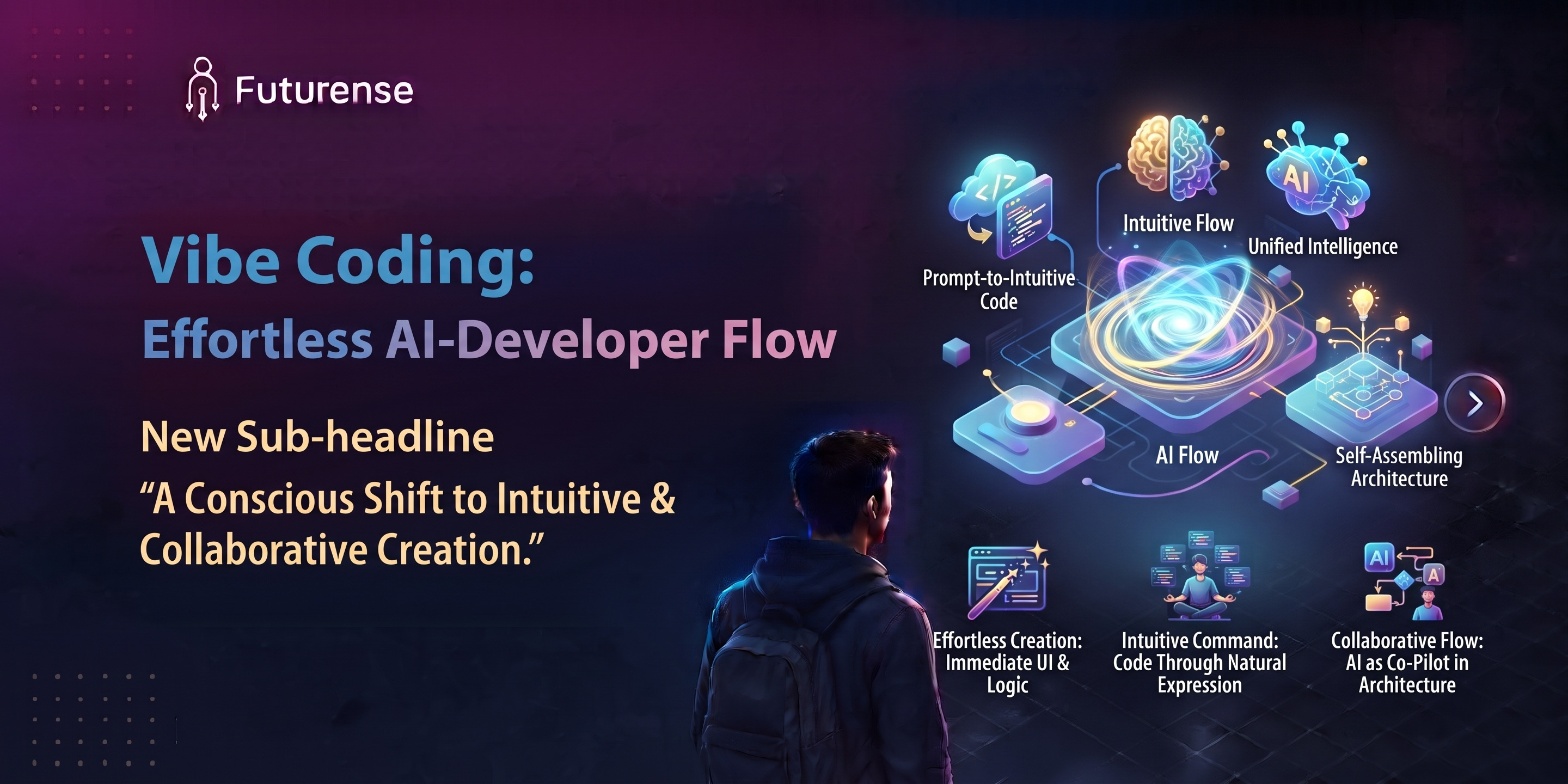


If you've been asking what is vibe coding, here's the short version: it's a way of building software where you describe what you want in plain, ordinary language, and an AI model writes the actual code, often without you reading every line it produces. Instead of typing syntax, you're steering: describing intent, checking the result, and prompting again until it works. It's a genuine shift in how a growing share of software gets built, not a rebrand of an old idea, and it comes with real tradeoffs worth understanding before you rely on it.
Vibe Coding, Defined Simply
Traditional programming means writing code yourself, line by line, in a specific language, following syntax rules you had to learn. Vibe coding replaces most of that typing with conversation: you tell an AI model what you want built, in the same plain language you'd use to explain it to a colleague, and the model generates the working code.
The distinguishing feature isn't that AI helps write code, tools have done that for years. It's how much trust the developer places in the output without personally verifying it. In its purest form, vibe coding means accepting what the AI produces, testing whether it works, and prompting again to fix what doesn't, rather than reading and understanding every generated line the way traditional code review requires.
Who Coined the Term (and Why It Stuck)
AI researcher Andrej Karpathy, a former OpenAI founding member and Tesla's former AI lead, coined "vibe coding" in February 2025 to describe this looser, conversational style of building software with AI. He described the experience as leaning fully into the AI's suggestions and momentum rather than tracking the code itself line by line.
The term spread fast, faster than most technical jargon typically does, partly because it's more evocative than the labels that came before it. "Low-code" and "no-code" describe tools; "vibe coding" describes an experience, and that framing resonated. Within months, the practice had moved well beyond hobbyist use: Linus Torvalds, creator of Linux, noted in a project README that a Python visualizer tool had been built essentially through vibe coding, a notable signal of adoption from one of the most respected engineers in the industry, not exactly an easy audience to impress with a trend.
How Vibe Coding Actually Works
The typical workflow looks like this: you describe a feature or a full application in natural language, "build a login screen with Google OAuth and passwordless email," for example. The AI model, working inside a tool like Cursor, GitHub Copilot, Claude, or a dedicated vibe-coding platform, generates the code, often the UI, backend logic, and sometimes deployment configuration in one pass. You test the result, and if something's wrong, you describe the problem in plain language again rather than opening the code and fixing it yourself.
This shifts the core skill the developer needs. Traditional programming rewards knowing how to write correct syntax. Vibe coding rewards knowing what to build and being able to judge whether what got built actually does it, closer to directing and reviewing than authoring line by line.
The pace this enables is genuinely different from assisted coding tools that came before it. Autocomplete-style AI tools sped up the same fundamental process, you still wrote most of the code, just faster. Vibe coding removes the writing step almost entirely for large stretches of a project, which is exactly why it can compress a weekend's worth of prototyping into an afternoon, and exactly why it removes the natural checkpoints, each line typed, each function reasoned through, that traditionally forced a developer to actually understand what they were building as they went.
AI researcher Andrej Karpathy, a former OpenAI founding member and Tesla's former AI lead, coined "vibe coding" in February 2025 to describe this looser, conversational style of building software with AI. He described the experience as leaning fully into the AI's suggestions and momentum rather than tracking the code itself line by line.
The term spread fast, faster than most technical jargon typically does, partly because it's more evocative than the labels that came before it. "Low-code" and "no-code" describe tools; "vibe coding" describes an experience, and that framing resonated.
Within months, the practice had moved well beyond hobbyist use: Linus Torvalds, creator of Linux, noted in a project README that a Python visualizer tool had been built essentially through vibe coding, a notable signal of adoption from one of the most respected engineers in the industry, not exactly an easy audience to impress with a trend.
How Vibe Coding Actually Works
The typical workflow looks like this: you describe a feature or a full application in natural language, "build a login screen with Google OAuth and passwordless email," for example. The AI model, working inside a tool like Cursor, GitHub Copilot, Claude, or a dedicated vibe-coding platform, generates the code, often the UI, backend logic, and sometimes deployment configuration in one pass.
You test the result, and if something's wrong, you describe the problem in plain language again rather than opening the code and fixing it yourself.
This shifts the core skill the developer needs. Traditional programming rewards knowing how to write correct syntax. Vibe coding rewards knowing what to build and being able to judge whether what got built actually does it, closer to directing and reviewing than authoring line by line.
The pace this enables is genuinely different from assisted coding tools that came before it. Autocomplete-style AI tools sped up the same fundamental process, you still wrote most of the code, just faster.
Vibe coding removes the writing step almost entirely for large stretches of a project, which is exactly why it can compress a weekend's worth of prototyping into an afternoon, and exactly why it removes the natural checkpoints, each line typed, each function reasoned through, that traditionally forced a developer to actually understand what they were building as they went.
Vibe coding sits in an unusual middle ground: more flexible than no-code, but with a review discipline that, in practice, more closely resembles no-code's hands-off approach than traditional programming's rigor, even though the underlying code is fully custom and just as capable of hiding a serious bug.
The Real Risks: What the Lovable Incident Taught the Industry
Vibe coding's biggest documented risk isn't hypothetical. Lovable, a vibe-coding platform, generated web applications for users through natural-language prompts, and researchers found that 170 out of 1,645 examined Lovable-created applications had a security flaw that would have allowed anyone to access personal data stored within them.
The applications worked, in the sense that they functioned and looked correct to a non-technical user. They just weren't secure, and nobody reviewing them closely enough would have caught it before it shipped.
This is the core tension vibe coding hasn't resolved: AI models have gotten dramatically better at producing code that runs correctly, but "runs correctly" and "is secure, maintainable, and correct in edge cases" are different bars, and the second bar is exactly the one traditional code review exists to catch. Skipping that review is what makes vibe coding fast; it's also what makes it risky when the stakes are higher than a weekend prototype.
The uncomfortable part of this incident, for anyone evaluating whether to trust vibe-coded software, is that roughly one in ten of the examined applications had this issue, not a rare edge case, a meaningfully common outcome across a large, real sample. That ratio is the clearest evidence available that "the AI usually gets it right" isn't the same guarantee as "the AI reliably gets security right," and the gap between those two claims is precisely where this kind of incident happens.
What This Means for Developer Careers in India
For developers already working in India's tech industry, vibe coding isn't replacing the need for engineering skill, it's changing which skill actually matters most. Being able to type fast or recall syntax from memory is worth less now than it used to be. Being able to read AI-generated code critically, catch a security gap, judge whether an architecture will scale, and know when a "working" result is actually a liability, is worth more.
This shows up directly in compensation data already. Our Software Developer Salary in India guide covers how premium technical stacks, applied AI, cloud infrastructure, platform engineering, security engineering, are pulling ahead of the market rate, while stacks closer to boilerplate implementation work are seeing that premium compress.
Vibe coding accelerates exactly this shift: the parts of development that were mechanical and repetitive are precisely what AI now handles fastest, which pushes real value toward judgment, architecture, and review, the parts that still require a human who genuinely understands what's happening under the hood.
For engineers early in their careers specifically, this is worth taking seriously rather than treating vibe coding as a shortcut around learning fundamentals. An engineer who can only direct an AI and can't evaluate its output is vulnerable in exactly the way the Lovable incident illustrates; an engineer who understands the fundamentals well enough to catch what the AI gets wrong is positioned to use these tools as genuine leverage rather than a liability waiting to surface.
When Vibe Coding Works Well
Vibe coding is a strong fit for rapid prototyping, internal tools with low stakes, personal projects, and situations where speed matters more than long-term maintainability. A Y Combinator cohort recently reported that a meaningful share of founders had built the majority of their codebase this way, evidence that for early-stage products where the goal is testing an idea fast, this approach can be a genuine advantage.
It's a poor fit for production systems handling sensitive data, anything with real security or compliance requirements, and codebases that need to be maintained and extended by a team over years. The Lovable case is the clearest illustration of exactly this mismatch, a technique well suited to speed applied to a context where security mattered more than speed.
TL;DR
- Vibe coding describing software in natural language and letting an AI model (like Claude, GitHub Copilot, or Cursor) generate the code, often with minimal line-by-line review
- Coined by AI researcher Andrej Karpathy in February 2025; adopted quickly enough that even Linus Torvalds used the term for a tool in the Linux kernel project
- It's genuinely faster for prototyping and non-experts building simple tools, but it carries real risk: a 2025 incident with the vibe-coding platform Lovable exposed personal data in 170 of 1,645 generated apps due to unreviewed security flaws
- The skill that matters most now isn't typing syntax faster, it's knowing enough to catch what the AI got wrong
- See our Software Developer Salary in India guide for how this shift is already showing up in which skills actually command a premium
Frequently Asked Questions
What is vibe coding in simple terms?
Vibe coding means describing the software you want in plain language and letting an AI model generate the actual code, often without reading or reviewing every line yourself. It shifts the developer's role from writing syntax to directing and evaluating AI output.
Who invented the term vibe coding?
AI researcher Andrej Karpathy, a former OpenAI founding member, coined the term in February 2025 to describe this conversational, AI-driven approach to building software.
Is vibe coding safe to use for real projects?
It depends heavily on the stakes involved. For prototypes, personal projects, and low-risk internal tools, it's generally fine. For production systems handling sensitive data, the risk is real and documented, a 2025 security review found meaningful vulnerabilities across a sample of vibe-coded applications on one popular platform.
Does vibe coding mean you don't need to learn to code anymore?
No. Vibe coding still requires enough technical understanding to evaluate whether AI-generated code is correct, secure, and maintainable. Developers who understand fundamentals can use these tools as genuine leverage; those who can't evaluate the output are exposed to the same risks that caused real, documented security incidents.
What tools are used for vibe coding?
Common tools include Cursor, GitHub Copilot, Claude, and dedicated vibe-coding platforms like Lovable and Replit, which generate code, and sometimes full applications, directly from natural language prompts.
How is vibe coding different from low-code or no-code platforms?
Low-code and no-code tools use pre-built visual components with limited flexibility. Vibe coding generates fully custom code from a prompt, offering more flexibility, but with a review discipline that in practice often resembles no-code's hands-off approach, even though the underlying code can hide the same bugs traditional programming would catch through code review.


Advanced PG Certificate in AI Engineering on Cloud and AIOps
IIT Roorkee
Engineer AI Systems for Top Enterprises, with the Most Critical Skills of the Decade