

An AI Engineer builds end-to-end intelligent systems by integrating AI components, machine learning models, large language models, computer vision, or NLP into real products and business workflows.
The role spans model selection, application-layer integration (prompts, retrieval, tool calls, agents), and ensuring the AI actually solves the business problem it was built for, not just that the model performs well in isolation.
AI engineers have a broader focus area aimed at full-cycle AI project management, with duties including integrating AI components into current systems, ensuring ethical AI standards, and fulfilling business needs. In 2026, a large share of AI Engineer work centers on generative AI specifically.
Hiring an AI Engineer makes sense when a company is shipping a product on top of large language models chatbots, copilots, agents, retrieval-augmented generation over internal documents, or workflow automation where the work is application-layer: prompts, tool calls, retrieval, evaluations, latency, and cost.
What Does an MLOps Engineer Actually Do?
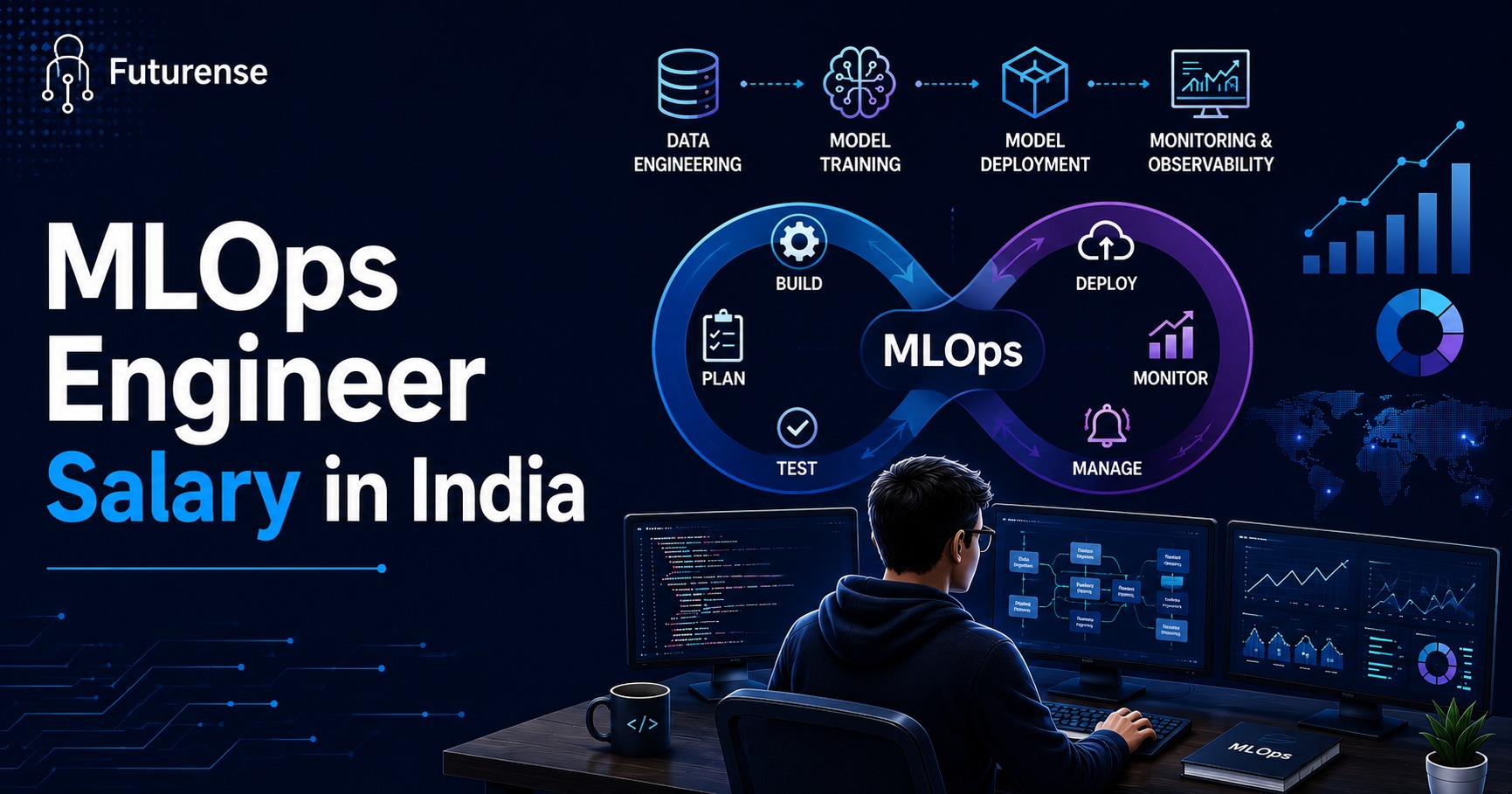
An MLOps Engineer specializes in taking machine learning models out of experimentation and running them reliably in real production environments building deployment pipelines, monitoring for drift, automating retraining, and keeping systems scalable and cost-efficient once they're live. If the AI Engineer decides what the system should do, the MLOps Engineer makes sure it keeps doing it correctly, at scale, without breaking.
MLOps Engineers specialize in taking machine learning models out of experimentation and putting them to work in real-world production environments, with their core responsibility being to ensure that models are deployed reliably, scale according to demand, and can be monitored and updated efficiently. For a deeper breakdown of the discipline itself, see our guide on MLOps.
AI Engineer vs MLOps Engineer: The Core Distinction
The cleanest mental model: an AI Engineer is closer to the product deciding what intelligence to build and how it should behave for the user. An MLOps Engineer is closer to the platform making sure that intelligence survives contact with real traffic, real data drift, and real production incidents.
If the AI Engineer is building the car, the ML/MLOps-adjacent engineer is perfecting the engine and the fuel injection system underneath it, a useful way to picture how the two roles complement rather than compete with each other.
In practice, both roles share real ground: both AI engineers and MLOps-focused engineers include MLOps elements in their work, the practice of deploying, tracking, and handling ML models in production environments and both are responsible for securing constant model performance and retraining as required. The difference is depth and ownership, not a hard wall.
AI Engineer vs MLOps Engineer: Side-by-Side Comparison
Skills Comparison: What Each Path Actually Requires
An AI Engineer needs strong programming fundamentals (Python especially), a working knowledge of AI/ML frameworks like TensorFlow and PyTorch, and increasingly, hands-on experience with LLM-specific tooling prompt engineering, retrieval-augmented generation, and agent frameworks.
AI engineers need a diverse skill set to tackle broad responsibilities: proficiency in Python, Java, C++, or R for building scalable systems, expertise in AI frameworks like TensorFlow and PyTorch, and cloud computing experience with AWS, Azure, or GCP.. Product sense and the ability to translate a business problem into a model or AI feature matters as much as raw technical depth.
An MLOps Engineer needs deep infrastructure skills, containerization (Docker, Kubernetes), CI/CD pipeline design, cloud platform depth, and specifically the tooling used to manage the ML lifecycle in production.
Our breakdown of MLOps tools like Kubeflow, MLflow, and SageMaker covers the specific stack in more depth. Where AI Engineers need to reason about model behavior and product fit, MLOps Engineers need to reason about system reliability, cost, and scale under real traffic.
The overlap: both roles increasingly need working MLOps literacy. MLOps and DevOps skills CI/CD pipelines and Docker for deploying models appear on both role's skill lists, which is exactly why so many engineers move fluidly between the two titles over a career rather than picking one permanently.
Day-to-Day Work: What a Week Actually Looks Like
An AI Engineer's week typically involves designing or refining prompts and retrieval pipelines, evaluating model outputs against real user scenarios, integrating a model or LLM API into a product feature, and iterating based on user feedback or evaluation metrics.
In smaller companies, this often extends into deployment work too; in startups, an AI Engineer often handles everything from prompt design to deployment, while in big tech, roles are more specialized and MLOps-focused engineers take over the scaling and reliability work.
An MLOps Engineer's week centers on pipeline health: monitoring deployed models for accuracy drift or data quality issues, automating retraining workflows, managing infrastructure cost and scaling, and responding to production incidents when a model's behavior degrades unexpectedly. The work is less about deciding what the model should do and more about guaranteeing it keeps doing it reliably once decided.
Salary Comparison: AI Engineer vs MLOps Engineer in India
Compensation for both roles has climbed sharply as companies move from AI experimentation to production deployment, but the two salary curves shape up differently.
AI engineer salaries in India range from roughly ₹6 LPA for freshers to ₹80 LPA or more for senior engineers at GCCs and top product companies, with Bangalore paying the highest average, followed by Hyderabad and Gurgaon.
Generative AI specialization pushes this further: Generative AI engineers in India earn ₹20–70 LPA across mid to senior levels, with entry-level GenAI roles starting at ₹8–12 LPA for freshers with relevant project exposure significantly higher than generalist AI fresher roles</cite>. See our full AI Engineer salary in India breakdown for the complete picture by city and company type.
MLOps Engineer salaries in India run from roughly ₹6–10 LPA at entry level to ₹20–35 LPA at senior level in the broad market, with specialists at top product companies and GCCs reaching ₹40–55 LPA or higher. See our detailed MLOps Engineer salary in India guide for the full experience and city-wise breakdown.
The pattern across sources is consistent: AI Engineer roles especially GenAI-specialized ones currently carry a higher senior-level ceiling than MLOps roles, though MLOps demand is growing fast as more AI pilots move into production and companies realize. MLOps engineers solve the problem that actually costs companies money: AI that breaks, drifts, or disappears after deployment.
Career Trajectory: Where Each Path Actually Leads
An AI Engineer's career path typically moves toward Senior AI Engineer, AI Lead, or increasingly specialized tracks like LLM Engineer, RAG Engineer, or AI Product Engineer roles that stay close to product and model behavior even as seniority increases.
Some AI Engineers move toward AI architecture or research-adjacent roles at the senior end, particularly in companies investing heavily in proprietary model development.
The MLOps Engineer career path typically progresses from Software Engineer or DevOps Engineer, to MLOps Engineer, to Senior MLOps Engineer, and eventually MLOps Engineering Manager, a trajectory that stays closer to infrastructure and platform leadership.
Some MLOps Engineers specialize further into ML Platform Engineering, building the shared infrastructure multiple AI teams deploy against, which tends to command a premium at scale-stage companies.
Neither path is a dead end if you change your mind later; the skill overlap between the two roles makes lateral moves genuinely common, more so than between most adjacent tech titles.
Which Path Should You Choose?
Choose AI Engineering if you're more energized by figuring out what an AI system should do and how it should behave for a real user prompt design, model selection, retrieval strategy, agent behavior and you're comfortable with the ambiguity of building something whose "correct" behavior isn't always well-defined yet.
If you enjoy building Machine Learning Engineer-style systems but want more product and application-layer exposure specifically, AI Engineering is usually the closer fit. Our guide on how to become an AI Engineer lays out the concrete skill path.
Choose MLOps Engineering if you're more energized by reliability, infrastructure, and scale, the satisfaction of knowing a system won't quietly break at 2 a.m., and the discipline of monitoring, automating, and hardening systems other people built.
If you're coming from a DevOps or backend infrastructure background already, this is usually the shorter path to a strong offer.
If you're still weighing AI/ML careers against Data Science more broadly, our comparison of AI/ML vs Data Science is worth reading before narrowing down to this specific decision. And if you're leaning toward the applied, product-facing side of AI Engineering specifically, Futurense's Forward Deployed AI Engineering PG Certificate with IIT Roorkee is built around exactly that combination of AI engineering and real deployment experience.
TL;DR
An AI Engineer builds intelligent systems integrating models, LLMs, and AI features into products while an MLOps Engineer keeps those systems reliably running in production, owning deployment, monitoring, and retraining.
If you want to build the intelligence itself, choose AI Engineering. If you want to own the infrastructure that keeps AI systems alive and trustworthy at scale, choose MLOps. Many engineers end up doing both, since the two roles increasingly overlap as companies move from AI pilots to production.
Is AI Engineer or MLOps Engineer a better career choice?
Neither is objectively better; they suit different strengths. AI Engineering fits people who want to build and shape intelligent product features, while MLOps Engineering fits people who want to own the reliability and scale of AI systems in production. AI Engineer roles currently have a higher senior-level salary ceiling in India, but MLOps demand is growing quickly as more companies move AI from pilots to production.
What is the main difference between an AI Engineer and an MLOps Engineer?
An AI Engineer builds and integrates intelligent systems models, LLMs, and AI features into products, focused on the application layer. An MLOps Engineer deploys, monitors, and scales those systems in production, focused on the infrastructure layer. AI Engineers decide what the system does; MLOps Engineers ensure it keeps doing it reliably.
Can an MLOps Engineer become an AI Engineer, or vice versa?
Yes, and it's a common move in both directions because the two roles share real skill overlap, particularly in MLOps literacy and cloud infrastructure. An MLOps Engineer moving into AI Engineering typically needs to build application-layer and product skills, prompt design, model selection while an AI Engineer moving into MLOps needs deeper infrastructure and deployment expertise.
Which pays more in India: AI Engineer or MLOps Engineer?
AI Engineer roles currently have a higher salary ceiling in India, particularly with generative AI specialization, ranging up to ₹80 LPA or more at senior levels versus roughly ₹35–55 LPA for senior MLOps roles. Entry-level pay for both roles is broadly comparable, in the ₹6–12 LPA range.


Advanced PG Certificate in AI Engineering on Cloud and AIOps
IIT Roorkee
Engineer AI Systems for Top Enterprises, with the Most Critical Skills of the Decade.