Organizational Behaviour, often called OB, is all about understanding how people behave at work, how they think, communicate, make decisions, and work together. The current era of multinational companies has not limited people working with the same ethnicity, but with various countries coming together. This sometimes makes it difficult for people in the organization to mingle and work together because of differences in culture and work environment.
Organizational Behaviour Definition and Scope
Organizational Behaviour focuses on understanding what human behavior at work is all about. It is the study of how individuals, groups, and systems behave within an organization. In simple terms, OB helps explain why people behave the way they do in workplaces and how organizations can create better environments for their employees.
Every organization, no matter the size, is driven by people, and to make sure that the environment is subtle and comfortable, OB plays a major role here. Motivating them and explaining how they interact in different situations makes all the difference. With remote work, diverse teams, constant innovation, and high performance expectations, organizations can’t rely only on rules and processes. At its core, Organizational Behaviour focuses on people, performance, and workplace culture.
Scope of Organizational Behavior
The scope of OB can be understood at three interconnected levels:
- Individual Level: This level examines various factors accounting for personal behavior and performance at work, such as motivation, perception, personality, and attitudes.
- Group Level: Here, OB looks at how people behave in teams, including leadership styles, communication patterns, teamwork, conflict management, and group dynamics.
- Organizational Level: This level focuses on the organization as a whole, examining its culture, structure, policies, and systems that shape how work is done.
Relationship Between Organizational Behaviour and Management
OB acts as a foundation for delivering effective management by motivating employees, leading teams, managing change, and designing organizational systems. This helps align people’s goals with business objectives and is rooted in a strong understanding when good management decisions are being taken.
Key Elements of Organizational Behaviour
- Individual Behavior: Motivation, perception, learning, and personality traits
- Group Behavior: Leadership, teamwork, communication, and collaboration
- Organizational Systems: Culture, structure, policies, and formal processes
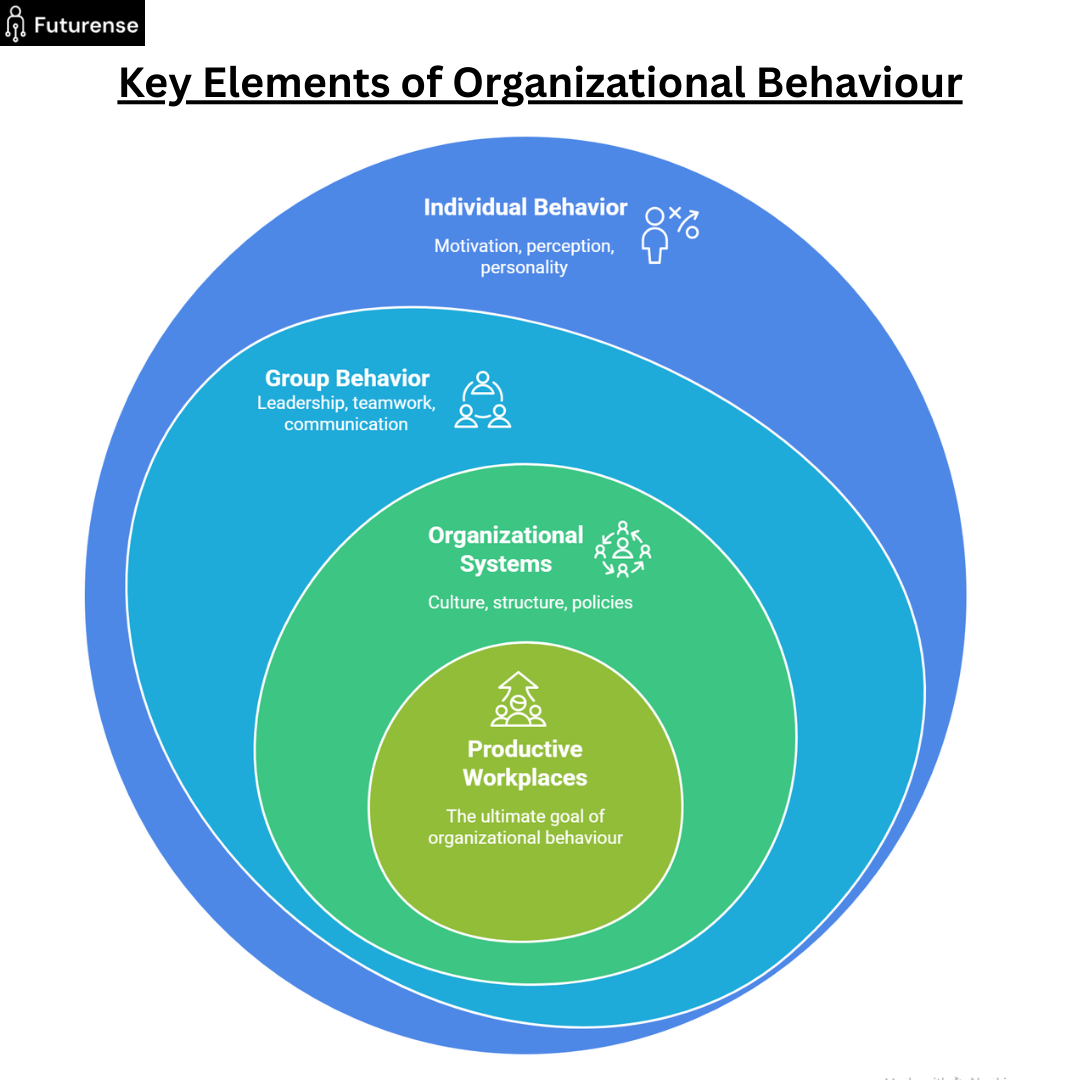
Together, these elements help organizations create productive workplaces where people feel engaged, valued, and aligned with the organization's goals.
Importance of Organizational Behaviour
The importance of organizational behaviour lies in its ability to help organizations understand and manage people more effectively. Since employees are the backbone of any organization, understanding how they think, feel, and act at work directly impacts overall success. The importance of OB becomes even more relevant in today’s dynamic, team-driven, and competitive work environments. Let’s understand the what and how of Organizational Behaviour.
Significance of Organizational Behaviour in the Workplace
The significance of organizational behaviour in the workplace is closely tied to how well an organization adapts, grows, and keeps its people engaged. As workplaces continue to evolve, understanding employee behavior becomes essential for long-term success.
- Managing change effectively: Organizational Behaviour helps leaders understand employee reactions to change, making it easier to manage transitions such as new technologies, restructuring, or policy changes with minimal resistance.
- Building a positive work culture and collaboration: By focusing on values, attitudes, and interpersonal relationships, OB supports the creation of a healthy work culture where trust, respect, and teamwork thrive.
- Aligning employee goals with organizational objectives: Understanding individual motivations allows organizations to align personal goals with business objectives, ensuring employees feel purposeful while contributing to overall organizational success.
Applying Organizational Behaviour Through Management Education
Professionals who want to apply organizational behaviour concepts in real business environments often look for structured management education alongside their work experience. Programs such as an online MBA for working professional help learners understand leadership, team dynamics, organizational culture, and decision-making through real-world case studies while continuing their careers. Such programs are designed to bridge theoretical management knowledge with practical workplace application.
TL;DR
Organizational Behaviour plays a crucial role in helping organizations adapt to change, whether it’s new technology, restructuring, or shifting market demands. It encourages a healthy work culture built on trust, collaboration, and open communication. By understanding employee behaviour, organizations can better align individual goals with business objectives, improve engagement, reduce resistance to change, and create a workplace where both people and performance grow together.
FAQS: Organizational Behaviour
What is meant by organizational behavior?
Organizational behavior (OB) is the study of how individuals and groups behave within a workplace. It helps organizations understand employee motivation, communication, leadership, and teamwork to improve productivity and work culture.
What is the scope of OB?
The scope of organizational behavior covers three levels: individual behavior (motivation, personality, perception), group behavior (teamwork, leadership, communication), and organizational systems (culture, structure, and policies).
Why is organizational behavior important?
Organizational behavior is important because it improves employee engagement, teamwork, leadership effectiveness, and decision-making. It also helps organizations reduce conflicts, increase productivity, and build a positive workplace culture.
What are the 5 OB models?
The five major organizational behavior models are Autocratic, Custodial, Supportive, Collegial, and System models. Each model explains different management approaches and how organizations motivate and manage employees.


MBA with AI for Working Professionals
IIM Sirmaur
India’s first AI-native MBA, designed for tech & non-tech professionals.