

A friend of mine spent eight months collecting certifications before she landed her first cybersecurity analyst role. Here's the part that surprised her: the certifications weren't what got her hired.
It was a home lab project. Something she built on her own laptop to monitor her own network traffic. Nobody assigned it. Nobody told her it would matter.
But it came up in every single interview, because it was the one thing on her resume that wasn't identical to every other applicant's.
That's the piece most guides on how to become a cybersecurity analyst leave out. They hand you a certification checklist and call it a roadmap. It's not a roadmap. It's a shopping list.
Here's the version with the parts people skip.
Quick Answer, If You're Short on Time
How to become a cybersecurity analyst comes down to five real stages: fundamentals, hands-on practice, one strategic certification, honestly navigating the entry-level experience bottleneck, and a portfolio that proves you did actual work.
Most people underestimate stage two. They overinvest in stage three. Don't make that mistake.
What Does a Cybersecurity Analyst Actually Do?
The job title undersells the work, so it's worth being specific before diving into the roadmap.
On any given day, you might review alerts from a security monitoring system. Investigate whether a flagged login was a real threat or a false alarm. Patch a known vulnerability before someone exploits it. Write up an incident report after something did go wrong.
It's less car-chase, more pattern recognition. Genuinely interesting work if you like puzzles with real stakes attached.
Step 1: Fundamentals Before Certifications
This is where I'd push back hardest against the usual advice.
Certifications matter. But they mean very little if you don't understand what's underneath them.
Start With Networking and Systems
Learn how data actually moves across a network. What a firewall is really doing. How DNS resolution works.
Then move into operating systems. Genuine comfort with Windows and Linux command lines, not just familiarity with the desktop.
Learn the CIA Triad Properly
What the CIA triad actually means in practice, Confidentiality, Integrity, Availability, isn't just an interview flashcard answer.
It's the actual mental model experienced analysts use to decide whether something is a real risk or just noise. Skip this step, and you'll be memorizing exam answers without understanding why any of it matters. That gap shows up fast in a real interview.
Step 2: Learn to Actually Break and Defend Things
Reading about security only gets you so far. At some point, you need to get your hands genuinely dirty.
Build a Home Lab
This sounds intimidating. It isn't.
A couple of virtual machines on your own laptop, one acting as attacker, one as target, teaches you more in a weekend than a month of passive reading. This is exactly what made my friend's application stand out. Not because it was sophisticated. Because it was hers.
Practice on Structured Platforms
TryHackMe and HackTheBox are the two most commonly recommended starting points, for good reason.
They turn abstract security concepts into actual puzzles you solve. That sticks in memory far better than a textbook chapter ever will.
Pick Up Basic Scripting
Python specifically, for automating repetitive analysis tasks.
You don't need to become a software engineer. But the ability to write a simple script to parse log files, instead of scrolling through them by hand, is a real, visible difference between candidates.
Step 3: Get Certified, Strategically
Certifications belong here in the sequence. After fundamentals and hands-on practice. Not instead of them.
CompTIA Security+ is the standard entry-level certification most job postings still reference. It's broad, foundational, and genuinely respected as a baseline.
Certified Ethical Hacker (CEH) goes deeper into offensive security concepts. Useful if you're leaning toward penetration testing or red team work eventually.
CompTIA CySA+ focuses specifically on the analyst side, threat detection, incident response, and the actual day-to-day role this guide is about.
Don't chase all three back to back. Pick one. Get genuinely good with the material behind it. Then decide if the next one adds something, or whether you'd get more value from another home lab project instead.
For a deeper breakdown of which certifications are actually worth the exam fee, a genuinely useful list of cybersecurity certifications worth the money is worth reading before you commit.
Step 4: Face the Entry-Level Bottleneck Honestly
This is the part almost nobody tells you clearly enough.
"Entry-level cybersecurity analyst" postings frequently ask for two to three years of experience. That's a real, frustrating contradiction. Pretending it isn't real doesn't help you plan around it.
Three Honest Workarounds
A general IT support or help desk role first. Sounds like a step sideways. Gets you real, paid exposure to systems and troubleshooting that translates directly.
A SOC (Security Operations Center) tier-1 analyst role specifically. Often the actual entry point, even when it's rarely labeled "entry-level" in the posting.
A structured internship or apprenticeship program that explicitly doesn't require prior experience. These exist precisely because the industry knows the experience requirement is a genuine bottleneck.
Don't take a rejection from a "three years required" posting personally. That listing was often written by someone who wants an experienced hire but is calling it entry-level for budget reasons. It's a quirk of how these roles get posted. Not a verdict on your readiness.
Step 5: Build a Portfolio, Not Just a Certificate List
A resume with four certification acronyms and nothing else looks identical to hundreds of other applications. What actually differentiates you:
Documented home lab work. Not just that you built something, a written breakdown of what you set up, what you found, what you'd do differently. This is the single highest-leverage thing you can add at this stage.
Capture-the-flag competition participation. Even a mid-tier placement shows initiative a certification alone can't.
A GitHub or blog documenting your learning. Doesn't need to be polished. It needs to show real, specific work, not a generic "I'm passionate about cybersecurity" line that could apply to anyone.
Should You Specialize Early, or Stay Generalist?
This comes up constantly once people get past the basics. The honest answer: stay generalist longer than feels comfortable.
Cybersecurity has real specializations, penetration testing, cloud security, incident response, governance and compliance. It's tempting to pick one early because it feels focused. Resist that instinct in your first year or two.
The analysts with the most career flexibility later are usually the ones who built broad fundamentals first. It's genuinely hard to know which specialization suits your working style until you've had real exposure to more than one.
Someone who thinks they want penetration testing sometimes discovers they actually enjoy the investigative, pattern-matching work of threat detection far more, once they've genuinely tried both.
Learning how to become a cybersecurity analyst isn't really about picking a lane on day one. It's about building enough range that the lane picks itself, once you've got real experience to judge by.
A Realistic Timeline
Most people starting from zero are looking at somewhere between eight months and two years. It depends heavily on whether you're doing this alongside a full-time job, a degree, or with dedicated focus.
Eight to twelve months of consistent effort, fundamentals, hands-on practice, one solid certification, real portfolio work, is realistic for a genuine entry point. Whether that's a SOC tier-1 role or an IT support position with a clear path upward.
Compressing this into six weeks of certification cramming tends to produce candidates who can pass a multiple-choice exam but freeze the moment an interviewer asks a genuinely applied question.
Where Formal Training Fits In
Self-study, home labs, and certifications can absolutely get you there. Plenty of working analysts built their careers exactly that way.
But a structured program has one real advantage worth naming honestly: it forces sequencing and accountability that's genuinely hard to maintain solo over eight or twelve months. Especially once the initial motivation fades a few weeks in, which happens to almost everyone.
If self-directed learning has stalled for you, or you want this roadmap taught by people already working in the field rather than pieced together from forum posts, that's a reasonable point to look at a structured postgraduate certification instead of forcing momentum entirely on your own.
What This Actually Pays
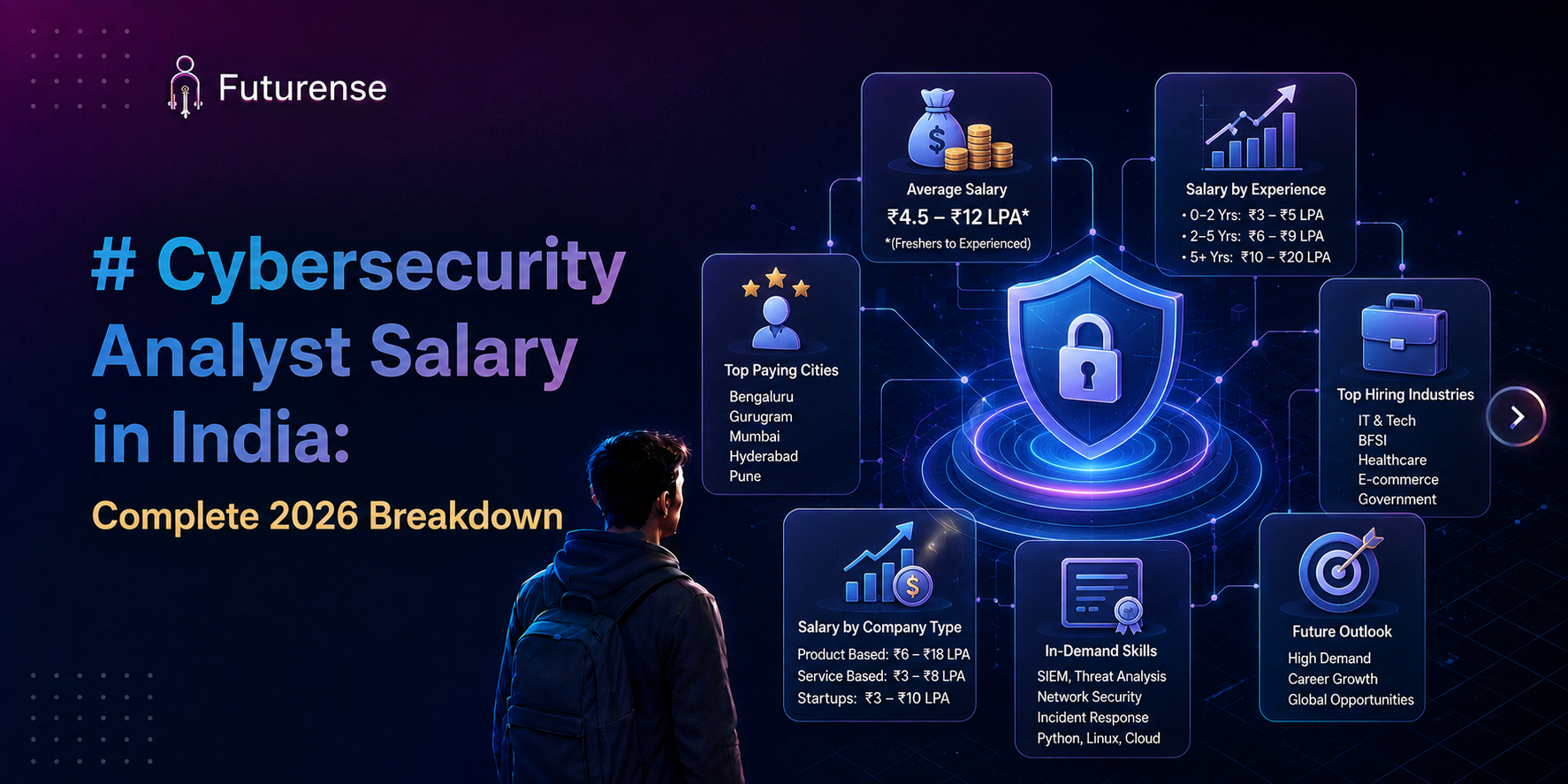
Worth knowing what cybersecurity analysts and related roles actually earn in India before committing real months to this path.
Compensation expectations should factor into whether this timeline and effort genuinely make sense for your situation, not a vague "cybersecurity pays well" impression alone.
Mistakes That Slow People Down
Certification collecting without application. Four certifications and zero hands-on projects is weaker than one certification and a genuine home lab writeup. Employers can tell the difference immediately.
Rushing toward "exciting" specializations. Penetration testing and red teaming look appealing early. Jumping there before you understand networking fundamentals just means memorizing tool commands without understanding what they're doing.
Applying only to postings labeled "entry-level." This artificially shrinks your opportunity pool. SOC analyst, IT support, and help desk postings are often more realistic entry points than anything explicitly labeled for beginners.
Treating this as purely technical. Communication matters more than people expect. An analyst who can explain a real incident clearly to a non-technical manager is more valuable than one who can't, regardless of raw technical skill.
Signs You're Actually Ready to Apply
There's no perfect checklist moment. But a few honest signals matter more than a countdown of weeks.
You can explain your home lab project out loud to someone non-technical. Not just what you built, but why.
You've read a real security incident writeup, a public breach report, a CVE disclosure, and understood most of it without needing every term explained.
You can look at your own notes from two months ago and immediately spot what you'd do differently now. That specific kind of hindsight is a real sign of growth. Not just time passed.
If none of that feels true yet, that's fine. It just means there's more of this roadmap left to work through.
TL;DR
Becoming a cybersecurity analyst is not about collecting certifications. Build strong fundamentals in networking, systems, and security, then gain hands-on experience through home labs, TryHackMe/Hack The Box, and basic Python scripting.
Get one relevant certification such as Security+, rather than collecting multiple certifications. Since entry-level roles often ask for experience, consider SOC Tier-1, IT support, help desk, internships, or apprenticeships as entry points. Most importantly, build a portfolio that proves what you can actually do home lab projects, CTFs, GitHub documentation, and security writeups. A realistic timeline is 8 months to 2 years, depending on your background and learning pace.
How long does it take to become a cybersecurity analyst?
Realistically eight months to two years from a standing start, depending on whether you're studying full-time or alongside other commitments. Eight to twelve months of focused effort is achievable for a genuine entry point.
Do I need a degree to become a cybersecurity analyst?
Not strictly. Many analysts enter through certifications, hands-on practice, and IT experience rather than a formal degree, though a relevant degree can help with larger, more traditional employers.
What is the best certification to start with?
CompTIA Security+ is the most widely recognized entry-level starting point. It's broad, foundational, and referenced in a large share of job postings, even for roles that eventually need more specialized knowledge.
What is the biggest challenge in becoming a cybersecurity analyst?
The entry-level experience bottleneck. Many postings labeled "entry-level" still ask for two to three years of prior experience. Working around this usually means starting through IT support, a SOC tier-1 role, or a structured internship program.


PG Certificate Program in AI/GenAI Powered Cybersecurity
IIT Roorkee
Become the GenAI-native cyber defender every system needs with CEC IIT Roorkee Faculty.